Well and Septic for a Cabin: Costs, Order and Rules
People budget carefully for the cabin and then discover that getting water into it and waste out of it costs as much as the shell. It is the most common reason a small cabin budget doubles.
On a rural lot with no services, a drilled well and a conventional septic system together commonly run from about $15,000 to $40,000. The range is wide because both depend on things you cannot see from the surface.
Septic comes first, and it blocks everything
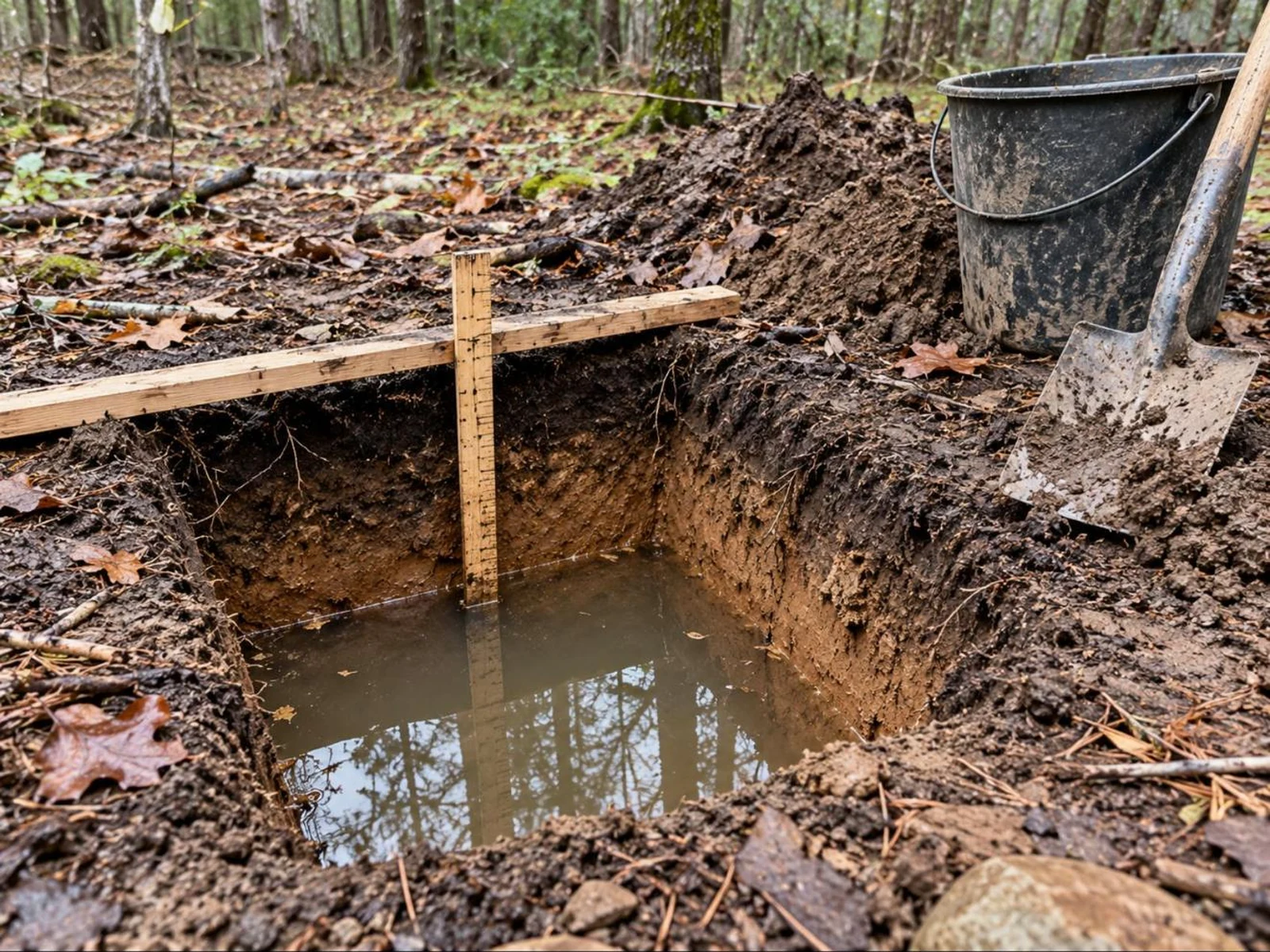
In most counties the health department has to approve a septic design before the building department will issue a building permit. That approval depends on a soil or percolation test, which has to be done in suitable ground conditions and can mean waiting for a season.
Start this before you commit to a build date. A lot that fails a perc test may not be buildable as a dwelling at all, which is why it is also worth checking before you buy land.
What drives the septic cost
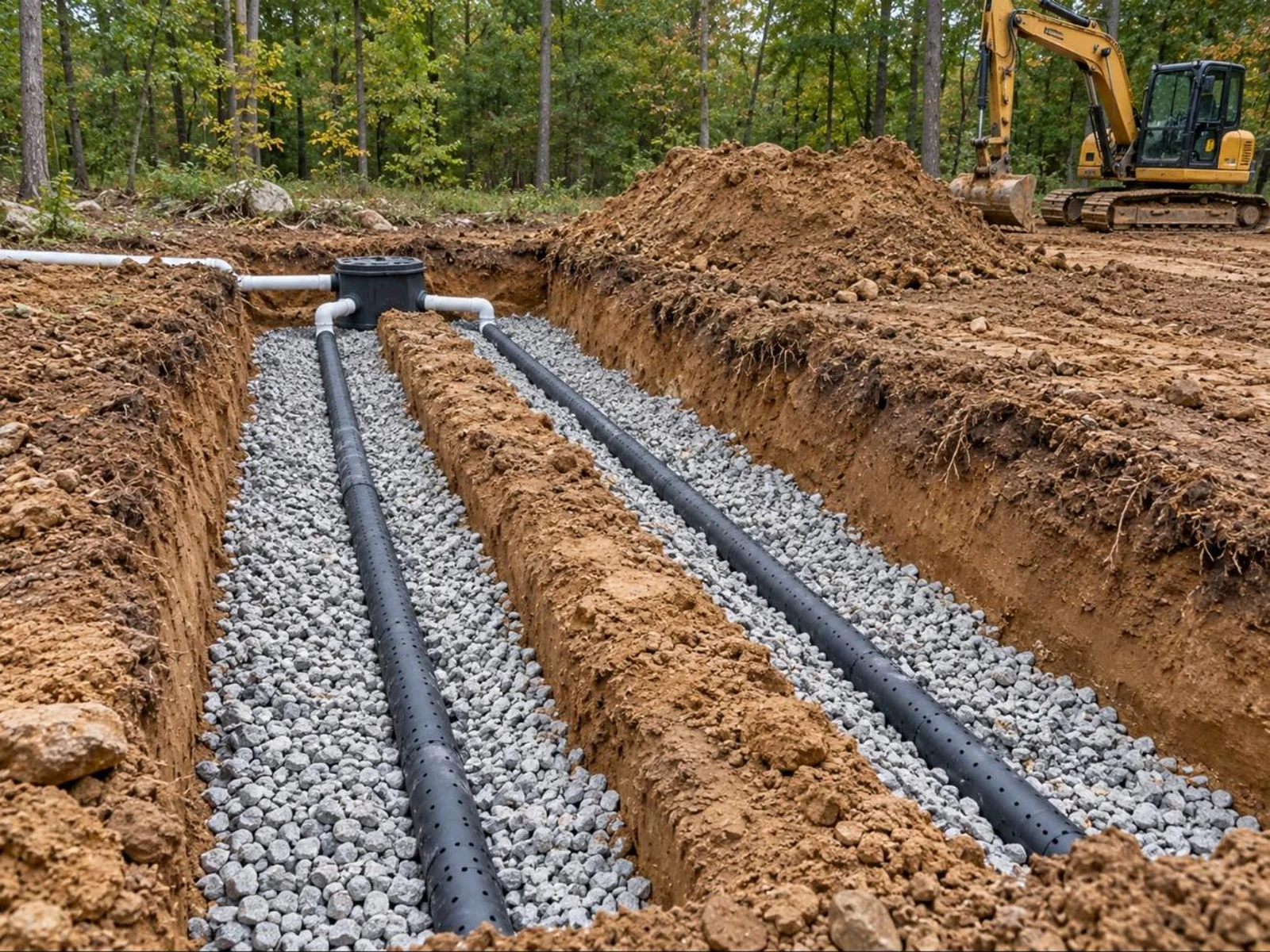
- Soil. Fast draining soil takes a conventional gravity field. Slow or shallow soil needs a mound, a sand filter or an aerobic unit, which can cost several times more.
- Slope and water table. Both can force a pumped system.
- Fixture count, not floor area. A two bathroom cabin is sized larger than a one bathroom cabin of the same size. This surprises people who assumed a small building meant a small system.
- Separation distances. Typically at least 100 feet from a well and 50 feet from property lines, which sometimes decides where the cabin can sit.
The EPA publishes a plain overview of septic system types that is useful for understanding why quotes vary so much.
What drives the well cost
Drilling is priced by the foot, so the depth to water is the whole story and nobody knows it until they drill. Neighbours are the best available guide. Add the pump, the pressure tank, the electrical run, a sanitary seal and a water test, and the finished cost is well above the drilling quote.
Ask the driller two things: what depth is typical within a mile, and what happens to the price if the first hole comes up dry.
A composting toilet does not usually remove the requirement
This catches a lot of people. Many health departments require an approved waste disposal system for any dwelling, regardless of the fixtures you intend to install, because greywater from a kitchen and shower still has to go somewhere. Ask before you plan around it.
Getting the order right
- Soil or perc test
- Septic design and health department approval
- Well permit and drilling
- Building permit submission
- Driveway and site work
- Foundation
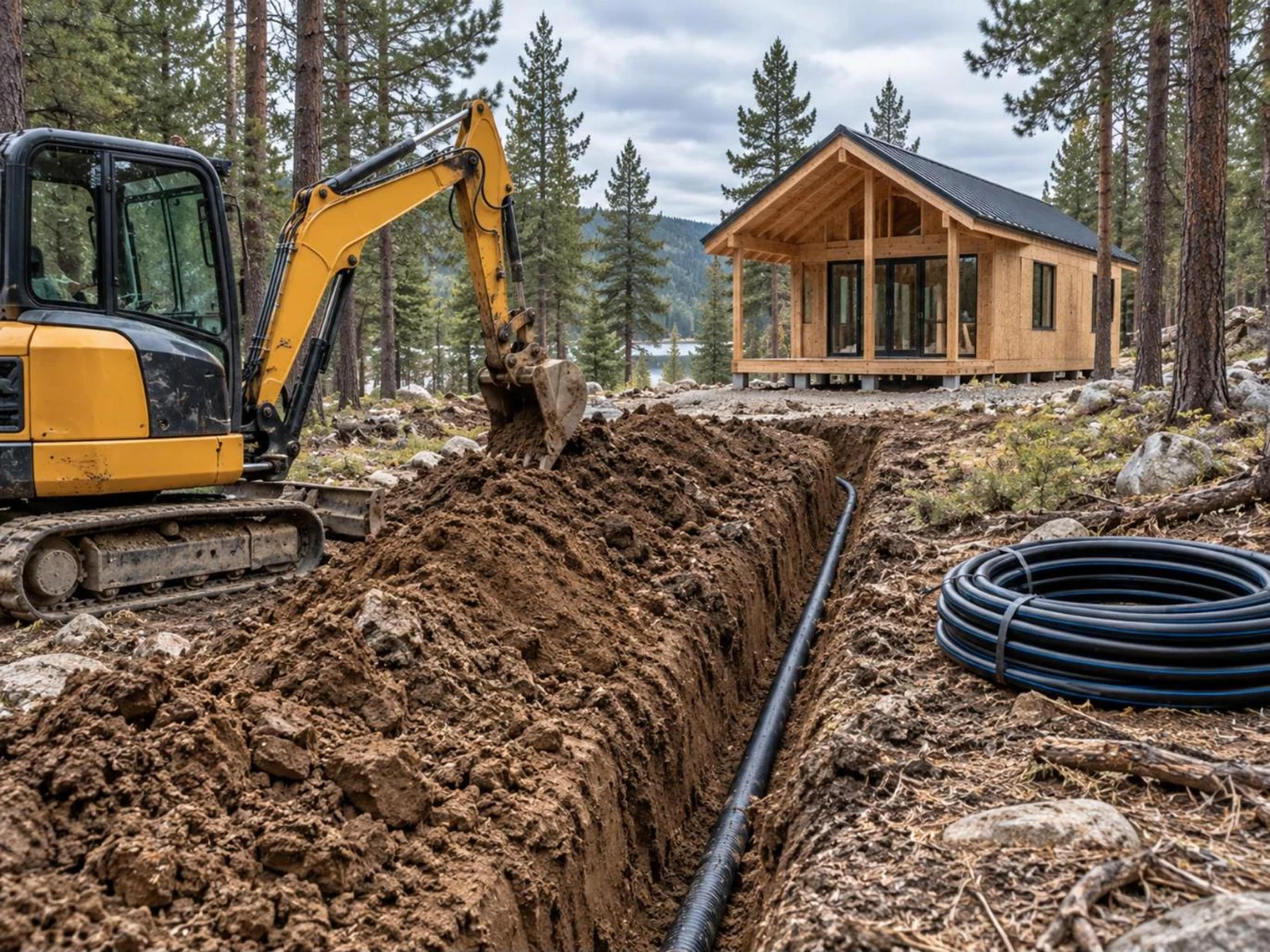
Trenching for water, power and waste is cheapest when it happens in one pass with the machine already on site, so plan the routes before the excavator arrives. The full approval sequence is in our cabin permit guide, and the rest of the budget is broken down in the cost to build a small cabin.
FAQ
How much does a well and septic cost for a cabin?
Commonly $15,000 to $40,000 combined on a rural lot, split roughly evenly. Difficult soil or a deep water table can push either one well past its own range.
Do I need a septic system if I use a composting toilet?
Usually yes. Most health departments require an approved system for any dwelling because greywater still needs disposal. Confirm locally before you design around it.
How far does a septic field have to be from a well?
Commonly at least 100 feet, with separate setbacks from property lines, surface water and the building. Your health department sets the exact figures.
Can I get a building permit before the septic is approved?
In most counties, no. The septic approval is a prerequisite, which is why it should be the first thing you start.
Complete plan sets, $99, nothing held back
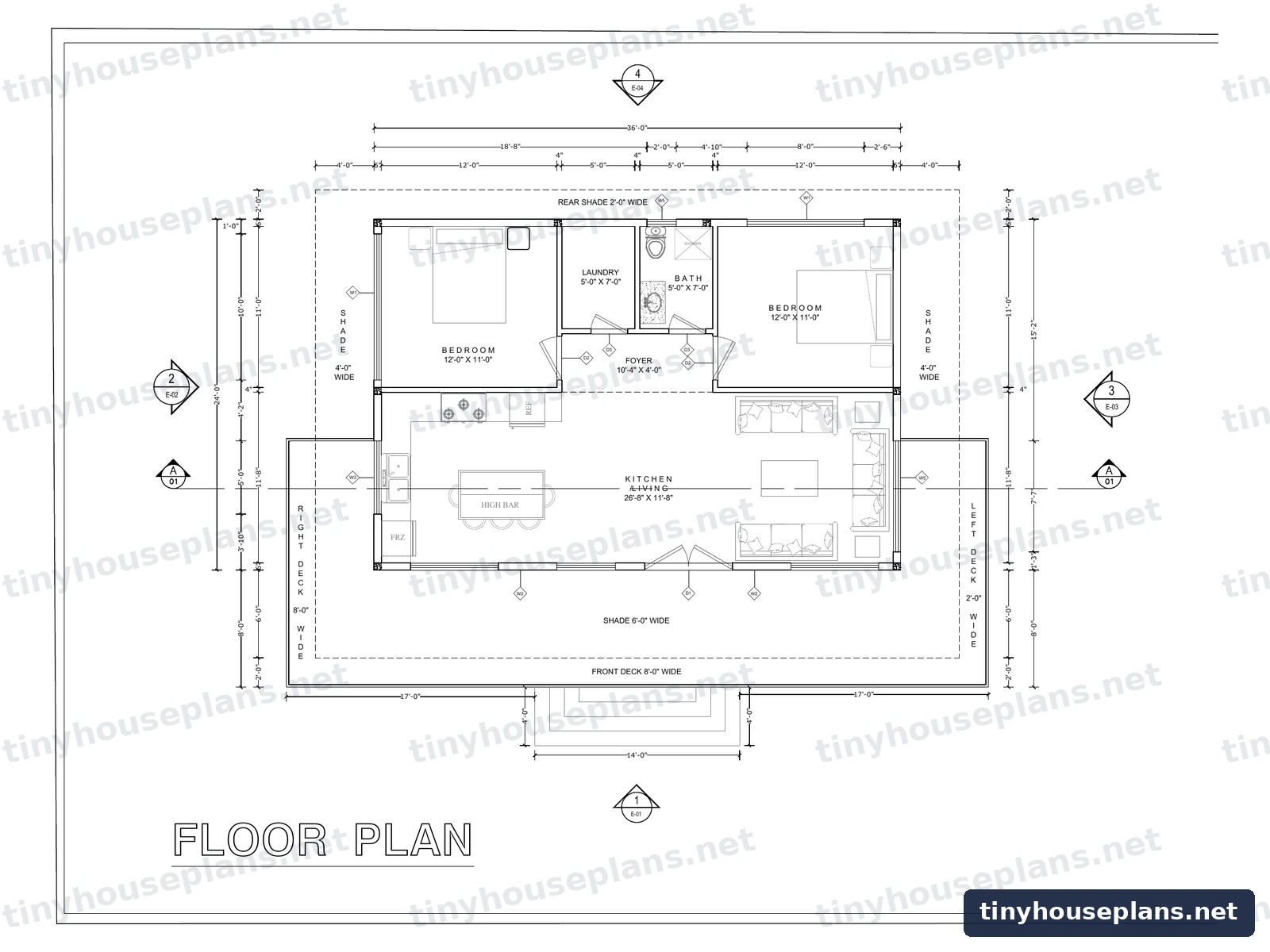
Every plan lists its sheets, room dimensions and build cost range before you pay. Floor plans, elevations, section, foundation, framing, electrical, plumbing and a material list, delivered as a print ready PDF the moment you check out.