Condensation in a Weekend Cabin: Why It Happens and How to Design It Out
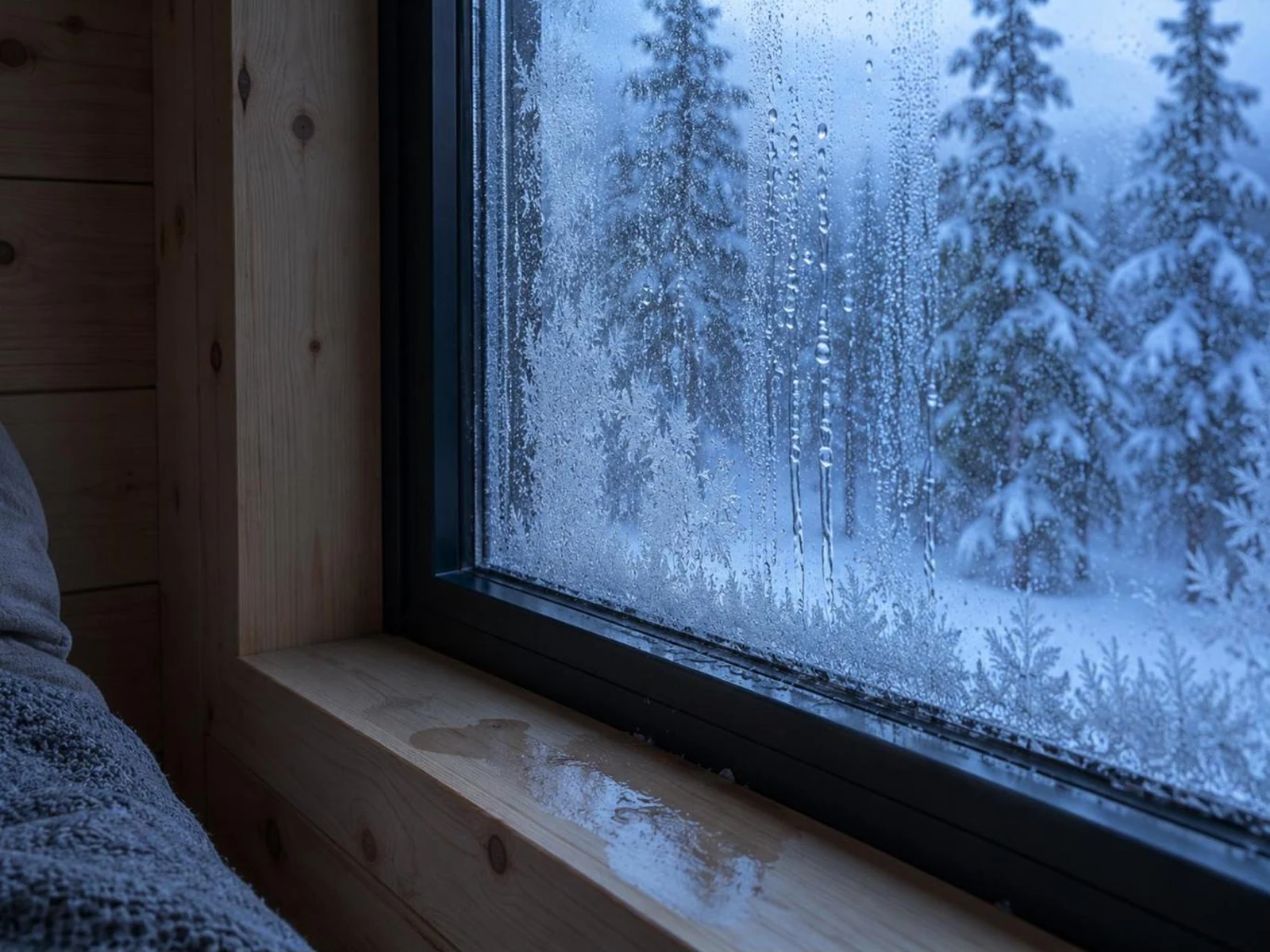
You arrive at the cabin after three weeks away, open the door, and everything feels wrong. The books against the outside wall are damp. There is frost on the inside of the glass. A towel left folded on the floor is wet through.
This is not a leak. It is condensation, and it happens because a cabin that sits cold and then gets heated hard for two days is the worst case for moisture that a building can face.
Why intermittent heating causes it
Warm air holds much more water than cold air. When you arrive and light the stove, the air warms in an hour. The timber, the drywall, the floor and the furniture do not; they take days. So you have warm, moist air touching surfaces that are still at the outside temperature, and the water comes out of the air onto those surfaces.
Then you add to the moisture load: cooking, showering, drying boots, breathing, and in many cabins an unvented appliance. Two people produce several pints of water a day without doing anything unusual.
Finally you leave. The heat goes off, the whole building cools, and everything that was holding moisture lets it go onto the coldest surface it can find.
The four places it shows up
- Windows. Always first, because glass is the coldest surface in the room.
- The floor. Especially a cabin on piers with an uninsulated floor over open, cold air.
- Exterior wall corners and behind furniture. Where air movement is lowest and the wall is coldest.
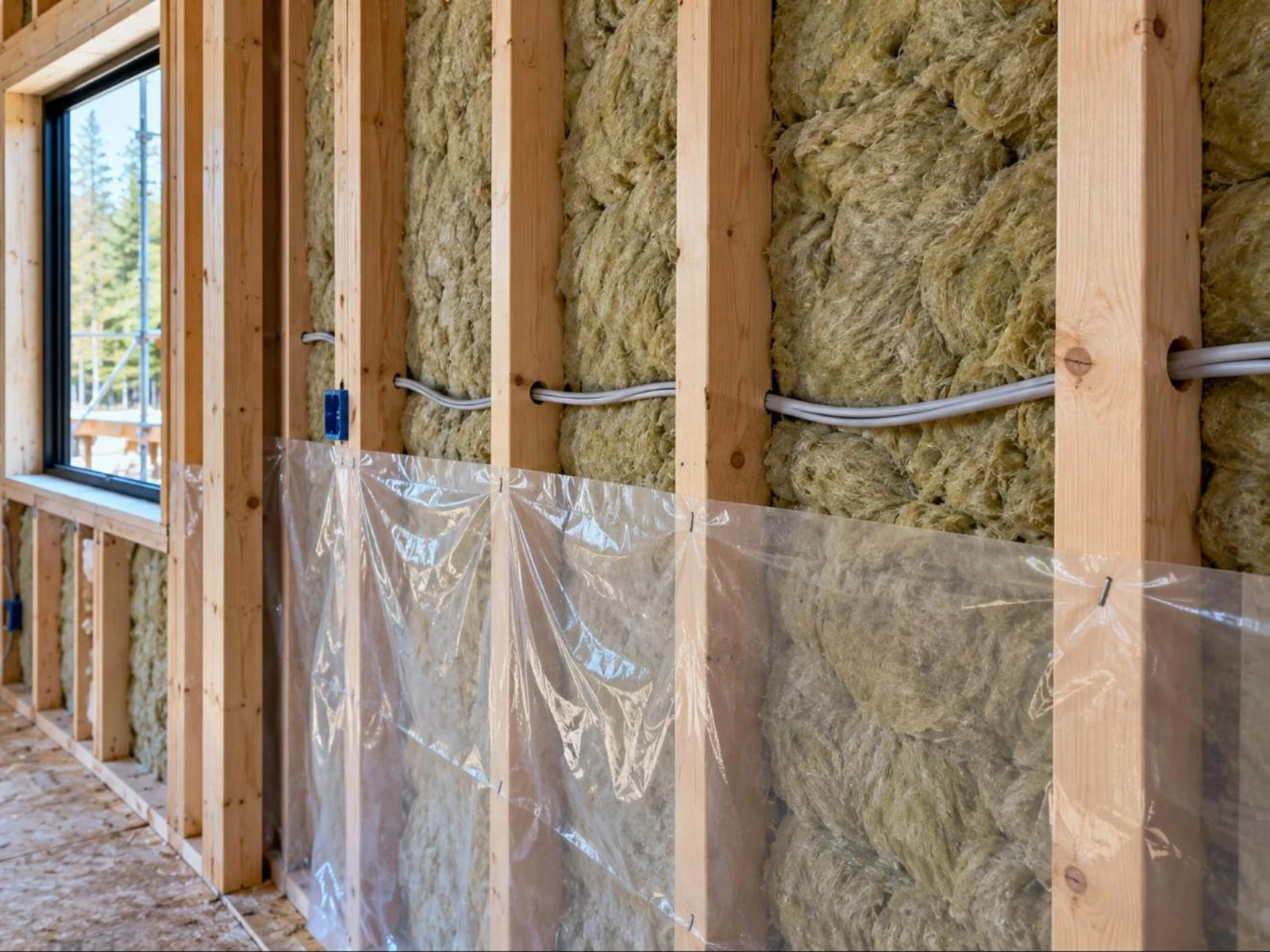
- Inside the wall. The one you cannot see, and the one that rots framing.
How to design it out
Air seal before you insulate
Most interstitial moisture arrives as moist air leaking through gaps, not as vapour diffusing through materials. Seal the bottom plate, the top plate, every penetration and the rim joist first. Insulation that air blows through does not insulate.
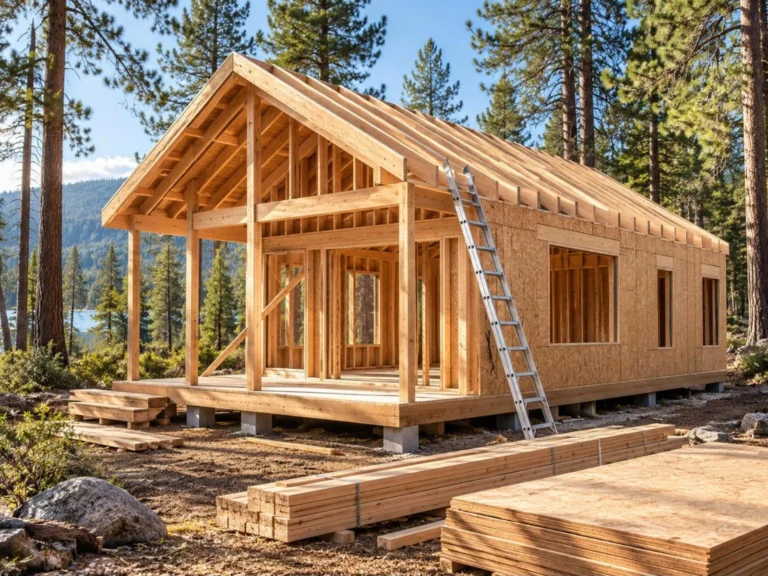
Insulate the floor properly if you build on piers
An elevated floor over open air is an enormous cold surface. Insulate it to at least the wall value, protect the underside from wind washing, and keep the insulation in continuous contact with the floor deck so there is no cold gap above it.
Get vapour control the right way round
In a cold climate the vapour retarder belongs on the warm side of the insulation. In a hot humid climate it generally does not belong there at all. The US Department of Energy publishes guidance on moisture control in homes that is worth reading before you choose a wall assembly. Getting this backwards is one of the few mistakes that is expensive to fix later.
Ventilate even when nobody is there
A trickle of air movement through the building between visits is worth more than any amount of heating on arrival. Trickle vents, a small continuously running extract fan, or simply leaving interior doors open and one vent cracked all help.
Leave a little heat on
Holding the cabin at a low background temperature between visits is the single most effective measure in a cold climate. It keeps the surfaces above the point where water forms and it stops the whole mass of the building from going cold.
What to do on arrival
- Open windows for ten minutes before you heat, not after.
- Heat gently and steadily rather than blasting the stove.
- Run the extract fan while cooking and showering, and for a while afterwards.
- Keep furniture a couple of inches off exterior walls.
- Before you leave, air it out, then set the background heat.
A note on new cabins
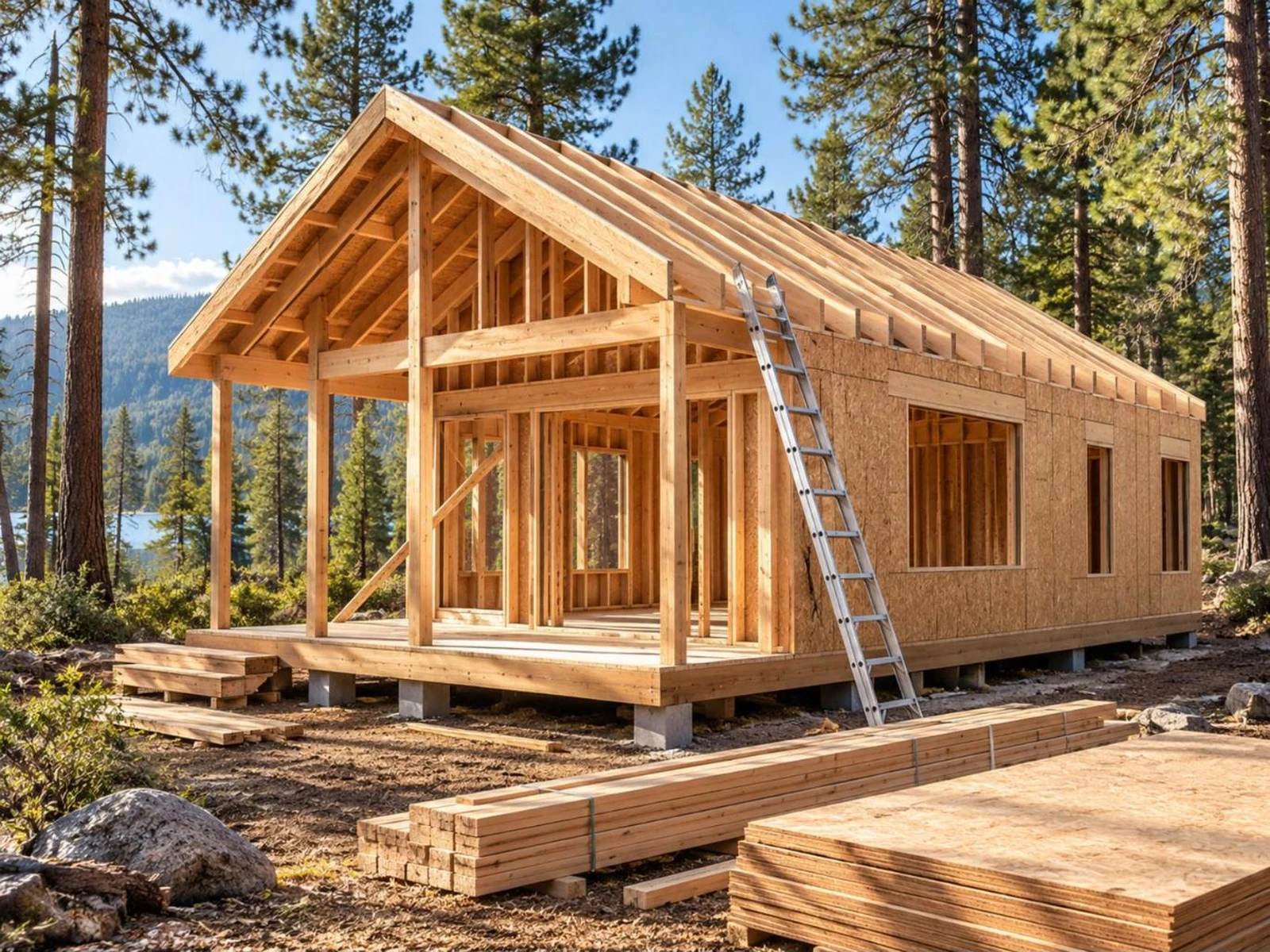
A newly built cabin contains a lot of water in its concrete, timber and plaster. The first winter is almost always the worst, and a building that behaves badly in year one often behaves perfectly in year two. Ventilate generously through that first season rather than concluding the design is wrong.
This is also why the order of the build matters: insulation and vapour control come after air sealing, not instead of it.
FAQ
Why is there condensation inside my cabin walls?
Warm moist indoor air is leaking into the wall and reaching a surface cold enough for water to form. The fix is air sealing first, then the correct vapour control for your climate, then insulation with no gaps.
Will a wood stove dry out a damp cabin?
It helps by warming surfaces and driving ventilation, but it does not remove water on its own. Air exchange is what removes moisture. Heat without ventilation can make the problem worse by releasing stored water into the air.
Should I leave the heat on in a cabin I visit occasionally?
In a cold climate, a low background temperature is the most reliable way to prevent condensation and freezing. It costs less than people expect once the building is insulated and sealed.
Is a vapour barrier always needed?
No. It depends on your climate zone and the rest of the assembly. In cold climates a vapour retarder on the warm side is normal. In hot humid climates it can trap moisture. Choose the assembly for your zone rather than copying one from elsewhere.
Complete plan sets, $99, nothing held back
Every plan lists its sheets, room dimensions and build cost range before you pay. Floor plans, elevations, section, foundation, framing, electrical, plumbing and a material list, delivered as a print ready PDF the moment you check out.